Reading cybersecurity puns on the clock is still slightly more productive than clicking a fake FedEx tracking link from the compliance team. We compiled this regrettable list so your security awareness slides look marginally less like a hostage video. Surviving modern workplace humor and office survival requires thick skin and multi-factor patience. Please lock your screen before anyone sees you laughing at these.
These top-tier security gags hit harder than an unscheduled Monday morning password reset.
If you already annoy your dev team with awkward programmer puns, these one-liners will get you muted in the group chat permanently.
My therapist says I have intimacy issues, which is just a polite way of saying I run a strict zero-trust architecture in my dating life.
Never date a penetration tester because they only want to exploit your vulnerabilities and leave a detailed PDF report on your nightstand.
The security analyst broke up with his girlfriend because she kept throwing too many unhandled exceptions during arguments.
My dad got a job in InfoSec, so now he makes two-factor dad jokes where you have to groan on two separate devices to verify you heard him.
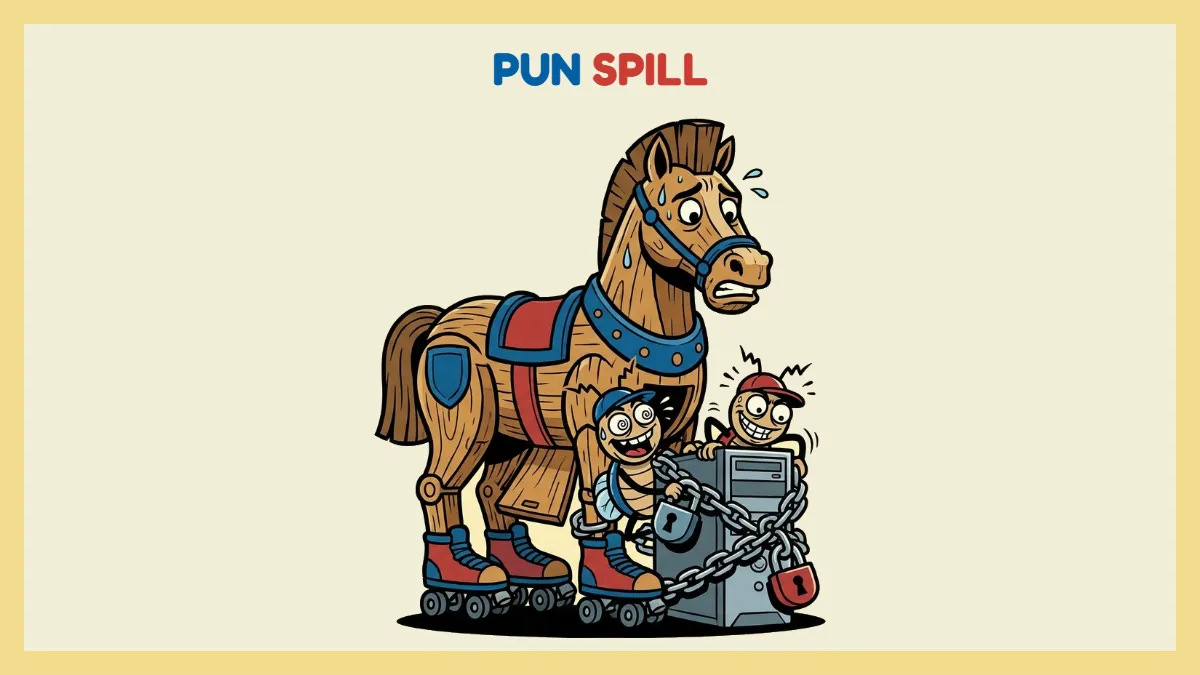
Malware authors have terrible work-life balance because they are always bringing trojans home to their families.
Our CISO does not drink coffee in the morning: he just reads the overnight threat intelligence logs and lets the panic wake him up.
I asked the IT security guy why he brought a ladder to the server room, and he said the company needed elevated privileges immediately.
Social engineers make terrible poker players because they spend the whole night trying to guess your mother’s maiden name instead of betting.
Cryptographers never gossip at office parties because they prefer to keep every conversation end-to-end encrypted.
A white-hat hacker walked into a bar, spotted an unlocked POS terminal, and spent four hours writing a responsible disclosure on a cocktail napkin.
Security auditors do not believe in ghosts, though they are deeply terrified of orphaned accounts haunting the active directory.
My bank security questions are getting way too personal: yesterday the portal asked for my childhood pet’s biggest regret.
The network administrator refused to go camping because there was no intrusion detection system around the tent perimeter.
You know your company has a weak security posture when the physical badge reader can be bypassed with a laminated Domino’s coupon.
Cyber criminals love gardening in their spare time because they are obsessed with planting rootkits in the soil.
I tried to tell a joke about an unsecured database, and now everyone in Russia already has a copy of the punchline.
Our security team treats every employee like a toddler carrying scissors near an open production server.
Working in cybersecurity is ninety percent staring at dashboards and ten percent begging executives not to use Password123 on the company VPN.
Phishing Puns For Suspiciously Bad Emails
Nothing tests your faith in humanity quite like watching a senior vice president wire ten grand in Apple gift cards to a fake CEO Gmail account.
Use these jokes before your next simulated email test ruins everyone’s Friday afternoon.
We call our office inbox the local aquarium because half the staff spends all morning taking the phishing bait.
That email claiming you won a free yacht is a spear-phishing attempt, and your ego was the easiest target in the building.
My coworker fell for so many fake invoice scams that the IT department bought him a tackle box for his desk.
Scammers love targeting C-suite executives because whaling pays way better than catching entry-level minnows.
If a Nigerian prince actually needed my help moving forty million dollars, he would at least pass our DMARC authentication check first.
The romance scammer told me we had a deep connection, which turned out to be an unauthorized remote desktop session.
You can always spot a phishy email by the urgent tone, the pixelated logo, and the greeting that just says “Kindly do the needful, Dear Customer.”
Our accounting manager clicks suspicious links with the reckless confidence of a bass jumping straight into a fisherman’s boat.
Phishing emails are a lot like bad pickup lines: ninety-nine percent get blocked, and the one that works ruins your entire weekend.
I reported the HR quarterly survey as a credential harvesting attack just to buy myself another forty-eight hours of peace.
Never trust an urgent text message from your boss asking for Steam gift cards unless your boss is secretly twelve years old.
The security team sent out a fake free pizza coupon as a phishing test, which legally qualifies as entrapment and workplace cruelty.
My aunt clicks every pop-up ad she sees, turning her laptop into a thriving wildlife sanctuary for Russian adware.
A good phisher does not need zero-day code when a fake parking ticket attachment works on half the marketing department.
Clicking unknown links in your spam folder is the corporate equivalent of eating gas station sushi off the floor.
Our helpdesk gives out a plastic trout trophy every month to whichever department clicks the most simulated scam links.
The scammer spelled our company name wrong three times in the subject line, yet Dave from sales still typed in his domain credentials.
If your bank really needed you to verify your account within ten minutes, they would not route the link through a free Russian blog domain.
Password And Two-Factor Authentication Puns
Forcing people to combine an uppercase letter, a hieroglyph, and a blood type every ninety days should violate the Geneva Conventions.
These jokes pair well with exhausted engineer puns while you wait for your authenticator code to expire at the worst possible second.
Writing your login credentials on a yellow Sticky Note under your keyboard is what experts call physical-layer vulnerability.
My password was rejected for not being complex enough, so I renamed it after my unresolved childhood trauma.
Multi-factor authentication is the universe’s way of asking if you are really sure you want to answer work emails from the couch.
Leaving your phone in another room during a 2FA prompt is the only cardio most remote workers get all week.
The six-digit authenticator timer ticks down faster than a movie bomb defusal whenever your boss is watching your screen.
I changed my Wi-Fi password to Incorrect so whenever my roommates type it wrong, the router just reminds them what to enter.
Using the same password across forty websites is like using one house key for your front door, your car, and a sketchy locker at the bus station.
Biometric security is great until you wake up looking so rough that Face ID locks your phone and calls the police.
My password manager holds my entire life together, making that one master passphrase the single point of failure for my existence.
Requiring sixteen characters, three symbols, and no dictionary words just guarantees everyone adds an exclamation mark to the current season and year.
Security questions are basically free biography research for anyone with five minutes and access to your public Facebook profile.
My company forces a password rotation every thirty days, so my current login is just the word Winter followed by seven angry keyboard smashes.
Passing a CAPTCHA test before logging in gets harder every year: yesterday I failed because I refused to count the pole as part of the traffic light.
Hardware security keys are fantastic until you wash your YubiKey in the laundry and lock yourself out of corporate payroll.
A weak password is like a screen door on a submarine: technically there, yet completely useless under pressure.
My grandmother secures her tablet with a four-digit PIN that happens to be her birth year printed right on her Medicare card.
When a website restricts your password to twelve characters maximum, you know they are storing that string in a plain-text spreadsheet from 2004.
I tried to use beefstew as my computer login, and the system rejected it for not being stroganoff.
Hacker, Malware, And Ransomware Puns
Cyber criminals spend all night writing malicious scripts just to lock up a regional hospital’s printer queue for half a Bitcoin.
Even fans of paranoid lawyer puns have to admit that ransomware negotiation is the bleakest spectator sport in corporate America.
Ransomware gangs have better customer support chat than our actual cable provider because they actually want your payment to go through.
A Trojan horse walks into a bar, waits for the bartender to turn around, and quietly lets forty-seven bots in through the back door.
The hacker went broke because he spent all his illicit crypto ransom trying to pay the gas fees on his own wallet.
Computer worms are the only parasites that can ruin a multi-million-dollar enterprise without ever touching a piece of dirt.
Spyware is basically an overly attached ex that tracks your keystrokes and sells your browsing history to advertisers.
Black-hat hackers never get sunburned because the only light they ever see comes from three vertical monitors in a basement.
My laptop caught so many viruses this week that Norton Antivirus just popped up a message saying thoughts and prayers.
Keyloggers are the only audience on earth that genuinely cares about every single typo you backspace at two in the morning.
A botnet is just a massive group project where thousands of infected smart fridges work together to crash a gaming server.
The script kiddie got grounded because his mom caught him running a DDoS attack past his nine o’clock bedtime.
Logic bombs are the ultimate passive-aggressive resignation letter from a disgruntled sysadmin who just lost his parking spot.
Cryptojackers do not steal your data: they just quietly turn your office laptop into a space heater that mines three cents of Monero a month.
An ethical hacker is someone who breaks into your house at midnight just to wake you up and yell about your cheap deadbolt.
Polymorphic malware changes its outfit more often than a pop star on a world tour just to dodge the antivirus scanner.
Rootkits have severe control issues because they refuse to run unless they have total kernel-level authority over your life.
Scareware pop-ups have been screaming that my computer has forty-two critical infections since I accidentally clicked a limewire link in 2007.
Fileless malware is the minimalist roommate of the threat world: it brings zero luggage and lives entirely inside your system RAM.
When the ransomware note demanded five million dollars, our CFO laughed and sent them a copy of our actual quarterly balance sheet.
Firewall And Encryption Puns To Protect Your Sanity
Without strong encryption and strict firewall rules, the internet would just be one giant open Google Doc edited by strangers.
Here are eighteen ways to laugh about keeping the digital barbarians outside the castle gates.
My social battery operates like a stateful firewall: unless I initiated the conversation first, your incoming small talk is getting dropped at the door.
Encryption is the art of turning your embarrassingly bad poetry into 256-bit gibberish that even the NSA refuses to read.
A bad firewall configuration is like hiring a nightclub bouncer who lets anyone inside as long as they wear Port 443 on their shirt.
Asymmetric encryption works just like my marriage: everyone gets my public key, while only my spouse knows how to decode my bad moods.
Our network engineer loves hash functions because he enjoys scrambling everything beyond recognition before breakfast.
Adding a cryptographic salt to your database is the only seasoning our dull corporate infrastructure will ever get.
An SSL certificate expiring on a Saturday morning is the fastest way to make your legitimate business look like a dark web bazaar.
The proxy server got promoted to management because it excels at taking credit for requests other machines actually fulfilled.
Air-gapped computers are the introverts of the tech world: zero internet connection, locked in a cold room, and completely unbothered.
Decryption without the private key is just expensive guessing with a space heater running at full blast.
Our Web Application Firewall blocks so much legitimate traffic that our own sales team looks like a foreign threat actor.
A VPN does not make you invisible online: it just moves your awkward search history to a rented server in Switzerland.
End-to-end encryption means nobody can read your messages except you, the recipient, and whoever is standing behind you on the subway.
Caesar ciphers were cutting-edge security until people realized shifting the alphabet by three letters takes about four seconds to crack over lunch.
Quantum computing is going to break RSA encryption right around the same time my company finally migrates off Windows Server 2012.
Network segmentation is just building tiny digital cubicles so when one server catches fire, the rest can keep processing spreadsheets.
Checksums are great for file integrity, though I wish I had an MD5 hash to verify if my coworkers are telling the truth.
Putting a cheap router in front of a corporate network and calling it a firewall is like guarding Fort Knox with a wet paper towel.
Cybersecurity Puns For Slack Channels And IT Helpdesks
The IT helpdesk is where optimism goes to die a slow death via uncategorized support tickets.
Drop these jokes into your team channel alongside your favorite sleep-deprived analyst jokes while waiting for a user to reboot their machine.
Half of our cybersecurity incidents exist because of a persistent Layer 8 issue sitting right between the keyboard and the office chair.
Submitting a high-priority ticket because the office Keurig lost Wi-Fi is a fireable offense in my book.
The SOC analyst drank so much cold brew during the night shift that his heart rate triggered a DDoS alert on his Apple Watch.
Our SIEM dashboard lights up like a Christmas tree every time an intern plugs a free conference thumb drive into a work laptop.
False positives are the car alarms of the security world: loud, constant, and completely ignored by everyone after week two.
Shadow IT is what happens when marketing buys a sketchy project management app on a corporate credit card without telling anyone.
We call our incident response playbook a choose-your-own-adventure novel where every single page ends in overtime.
Closing a security ticket with the comment working as intended is the cleanest way to avoid a thirty-minute Zoom call.
An unscheduled network outage is the only thing that forces software developers to actually make eye contact in the hallway.
Whenever someone says they cleared their browser cache, my lie detector script immediately throws a critical alert.
Tier 1 support is mostly convincing grown adults that the monitor power button is not the entire computer.
Our on-call pager goes off exclusively when I step into the shower or order expensive takeout.
Revoking an obnoxious coworker’s Active Directory permissions at 4:59 PM on termination day is the closest thing IT gets to a spa treatment.
Every time a developer asks for local admin rights, a security compliance officer loses another clump of hair.
We do not have a staging environment, unless you count testing firewall rules directly in production on a Friday.
The user claimed the virus installed itself, ignoring the four warning pop-ups they clicked through like a speedrunner.
Ticket escalation is the corporate art of making your panic attack someone else’s responsibility before five o’clock.
If turning it off and on again fixed people the way it fixes routers, HR would just power-cycle the sales floor every Tuesday.
Cybersecurity Jokes For Training Slides And Office Newsletters
Mandatory security training usually feels like watching paint dry in a windowless conference room.
Leaving your laptop unlocked at a coffee shop is basically running an open-source charity for local identity thieves.
Clean desk policies exist because your sticky note full of passwords was visible in the background of your company-wide Zoom call.
Tailgating into the office behind someone with a badge is only polite until the guy holding a clipboard steals three servers.
Public airport Wi-Fi has roughly the same hygiene standards as a communal toothbrush in a hostel bathroom.
The free USB drive you picked up in the parking lot does not contain Taylor Swift tickets: it contains a payload that will ruin our quarter.
Security awareness cartoons always draw hackers in black hoodies, even though real attackers probably wear sweatpants and crocs at home.
Oversharing on social media gives attackers the exact answers to your security questions before they even open a terminal.
Locking your workstation takes two keys, whereas explaining to compliance why the intern sent funny cat memes from your email takes two weeks.
Using your work email to sign up for sketchy coupon websites is how corporate breaches start and bonuses disappear.
Shoulder surfing on a crowded commuter train is the main reason nobody should read confidential merger spreadsheets in coach class.
If a stranger in a high-visibility vest asks for the server room key, check their badge instead of holding the heavy door open.
Shredding sensitive documents is therapeutic until someone feeds a stapled binder into the crosscut machine and jams the whole floor.
Updating your operating system takes ten minutes, while recovering from an unpatched exploit takes your entire holiday break.
Forwarding sensitive customer spreadsheets to your personal Gmail so you can work from the beach is a compliance nightmare with a tan.
That browser extension promising free shopping discounts is quietly selling your session cookies to the highest bidder.
Unsecured network printers are great until someone remotely prints five hundred copies of the Bee Movie script in the executive suite.
Physical security starts with locking the server closet instead of propping it open with a fire extinguisher because the AC broke.
Passing the annual security quiz on the first try deserves a medal, or at least immunity from the next phishing drill.
Data Breach And Cloud Security Puns
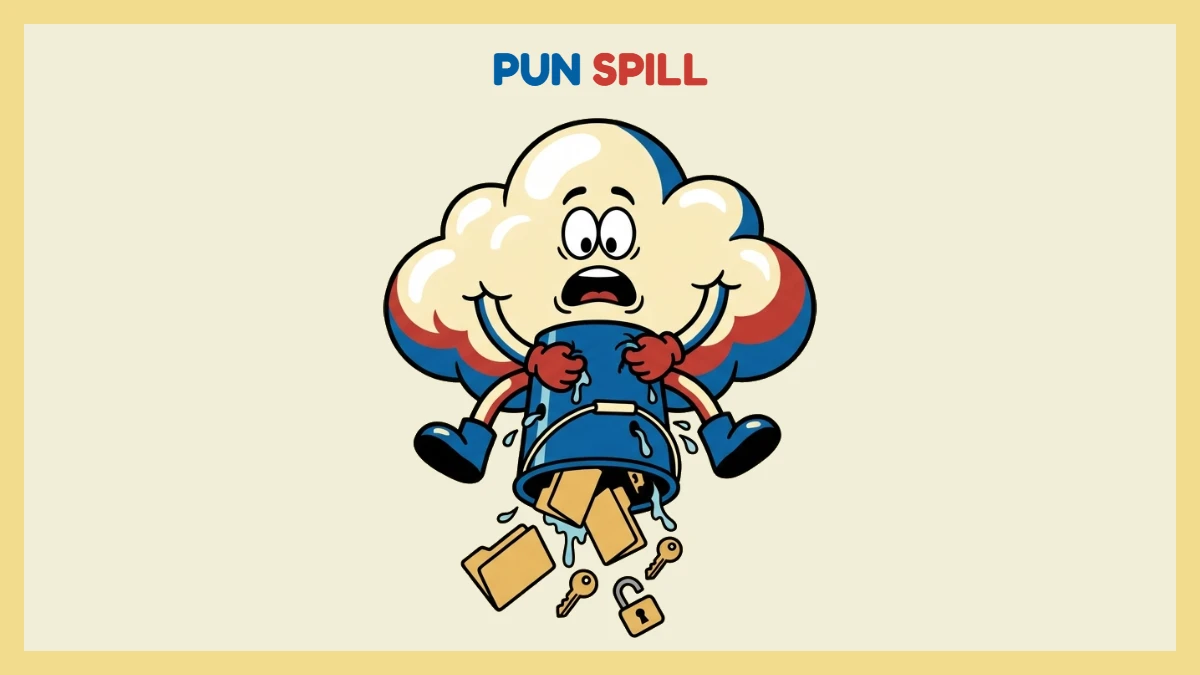
The cloud is just someone else’s computer, and half the time that computer is an unauthenticated storage bucket open to the entire planet.
Pair these breach jokes with spreadsheet-obsessed accountant puns when calculating the cost of free credit monitoring for four million customers.
Leaving an AWS S3 bucket set to public is the tech equivalent of stacking your company filing cabinets on the front lawn with a free sign.
Corporate apology emails after a data breach always start with “We take your privacy seriously,” right before admitting they lost your Social Security number.
At this point, my personal information has been leaked so many times that dark web brokers offer my identity in the bargain bin.
I have accumulated enough free credit monitoring subscriptions from corporate data breaches to last until the sun explodes.
Cloud migration is wonderful until you realize you just moved your messy on-prem security problems to a monthly subscription model.
Data exfiltration sounds like a fancy medical procedure, though it just means someone walked out the back door with four terabytes of customer records.
Our backup strategy is called hope-driven storage, where everyone prays the hard drive never makes a clicking noise.
Multi-cloud architecture means your security team gets to misconfigure permissions across three different vendor dashboards at once.
An insider threat is usually less like James Bond and more like a departing salesperson downloading the client contact list to a thumb drive.
Dark web monitoring alerts are great if you enjoy getting a text at midnight confirming your password from 2011 is still circulating.
Personally Identifiable Information is treated like gold right up until a vendor leaves an unencrypted CSV file on a public web server.
We store our disaster recovery plan on the exact same cloud server that goes down during a disaster.
When the press release says “no financial data was compromised,” it means the hackers only got your home address, phone number, and mother’s birth date.
Serverless computing is a lie: there is still a server, and somebody still forgot to patch it six months ago.
Data loss prevention tools are great at blocking legitimate emails to clients while ignoring the guy uploading source code to a personal Dropbox.
A leaky API is like locking every window in your house while leaving a doggy door wide open for a bear.
Container security is fun because now you can deploy the exact same vulnerable image five hundred times in thirty seconds.
The CISO stays calm during a breach because he always keeps three updated envelopes in his desk drawer.
Short Cybersecurity Captions For LinkedIn And Tech Socials
Tech influencers love posting dramatic photos of coffee mugs next to blurred terminal screens while lecturing everyone about resilience.
Use these short captions when you want engagement without sounding like an AI-generated thought leader.
Encrypt your feelings and patch your boundaries.
Zero trust, full coffee mug.
Powered by caffeine and false positive alerts.
My love language is end-to-end encryption.
Catching phish, never feelings.
Another day, another unpatched vulnerability.
Keep your friends close and your private keys on cold storage.
Currently rejecting all incoming packets of negativity.
Do not click that link: signed, your exhausted IT department.
Living life behind a strict firewall.
Two-factor authenticated and still barely functioning.
Born to chill, forced to rotate credentials.
Not all heroes wear capes: some just revoke admin access.
Dropping bad vibes like unauthenticated UDP traffic.
Threat level: Monday morning inbox.
Stay safe out there and lock your screen.
Just a human firewall trying to survive Q4 compliance audits.
May your uptime be high and your breach notifications be zero.
Nerdy InfoSec Puns About Ports, Packets, And Patches
If you actually have strong opinions about TCP versus UDP jokes, it might be time to step outside and touch some grass.
These deep-cut network security gags are built strictly for the people who memorize port numbers for fun.
I would tell you a joke about UDP, except I have no idea if you would actually get it and I do not care to check.
We tried telling a TCP joke at the conference, and the speaker kept repeating it until every single person in the room acknowledged the punchline.
A three-way handshake is the only acceptable form of physical contact at an information security convention.
Patch Tuesday is Microsoft’s monthly reminder that software is held together by duct tape and prayer.
Whenever our network goes down, do not bother checking the firewall rules: it is always DNS until proven otherwise.
SQL injection walks into a restaurant, asks for a table, and accidentally drops the entire reservation database on the floor.
Buffer overflows happen when you try to cram ten pounds of bad user input into a five-pound memory allocation.
Cross-site scripting is what happens when your browser trusts a sketchy website more than it trusts common sense.
A man-in-the-middle attack is basically digital eavesdropping for people who know how to spoof an ARP table.
Zero-day vulnerabilities are called that because the engineering team has zero days of weekend left to fix them.
Port 22 is like the VIP entrance for sysadmins, which is why every bot on the planet spends all day knocking on SSH.
Leaving Port 3389 open to the public internet is an open invitation for every ransomware gang on Earth to remote into your desktop.
Packet sniffing sounds illegal until you put Wireshark on your resume and call yourself a network diagnostician.
A sandbox environment is where security analysts detonate sketchy attachments like kids playing with firecrackers in a driveway.
Honeypots are the ultimate corporate trap: a fake server sitting in the DMZ waiting for a hacker to embarrass themselves on camera.
Privilege escalation is how a humble guest account suddenly promotes itself to supreme ruler of the domain controller.
Air-gapping a machine is the only way to be one hundred percent sure nobody can hack it without bringing a crowbar to the building.
Return-oriented programming proves that even if you ban new code execution, hackers will build a weapon out of the junk already lying around in memory.
Logging Off Before HR Revokes Your Network Access
Making it through an entire page of cybersecurity puns without unplugging your router deserves a certificate of completion.
Your brain is now officially fortified against bad office humor and suspicious email attachments.
Close your active sessions, clear your cache, and never click a link from an overly urgent coworker.
Rating of Regret: 9/10 Failed Phishing Simulations
Common Questions About Using Cybersecurity Humor At Work
Putting jokes into corporate security materials is a delicate balance between boosting engagement and getting called into a meeting with compliance. Here are the harsh truths about using InfoSec humor on the job.
Can cybersecurity puns actually improve employee phishing training?
Humor keeps employees awake long enough to remember the core rule: stop clicking weird attachments. A funny slide gets read, whereas a wall of compliance jargon gets muted on a second monitor.
Are hacker and data breach jokes safe for corporate Slack channels?
They are completely safe as long as your company is not actively surviving a real ransomware incident that morning. Read the room before dropping a breach joke in front of a stressed CISO.
What is the best way to use InfoSec jokes in an office newsletter?
Pair one short one-liner with a single actionable security tip, such as locking screens or spotting spoofed domains. Keep it brief so coworkers get the reminder before archiving the email.
Umer is the founder of PunSpill and a certified disappointment to his high school guidance counselor. He spends his days writing puns that make people groan and his nights arguing with Gerald, his emotional support opossum (and Head of HR).
He created this website because his friends muted him in the group chat. If you hated this article, please direct your complaints to the opossum; he handles the shredding.
I'm Umer. He's Gerald. I write the bad jokes; he handles the complaints (by sleeping). We created PunSpill so you have something to send your friends to annoy them. Read the full confession here.